During writing time, one question can stop an entire classroom: “How do you spell…?”
When we answer it, we solve the problem for one word, on one day. The next time that student needs a tricky word, they come right back to us. Meanwhile, the rest of the class is waiting, and the student who asked has stopped writing. (If that sounds familiar, it’s one of the reasons your writing block may not be working.)
The best spelling strategies for beginning writers give students a plan they can use on their own. That’s why I created the Spelling Helper, a one-page mat that walks K–2 students through spelling unfamiliar words with sound boxes and a phonics picture reference.
Usually, no. When we spell a word for a student, we do the thinking for them. When the student works it out, they practice encoding: turning the sounds they hear into letters they write. Encoding is the same skill phonics lessons build, so writing time becomes extra phonics practice.
The goal of a first draft is not perfect spelling. It is a thoughtful attempt using the sounds students know. That keeps them writing, and it shows you exactly which sounds each child has mastered.
The Spelling Helper walks students through four steps.
Students can remember the routine with the phrase printed right on the mat: I will say it, tap it, fill it, and then write, write, write!

Sound boxes, also called Elkonin boxes, give each sound in a word its own space. Tapping each sound builds phoneme segmentation: hearing the separate sounds in a spoken word. Writing a letter in each box connects those sounds to print.
Most teachers already use sound boxes in phonics lessons. The Spelling Helper moves that same routine into writing time, where students actually need it. This is how phonics skills transfer to independent writing.
The bottom of the mat includes a picture reference for the sounds beginning writers need most:
Each sound has a picture cue, such as an apple for short a and an eagle for long e. When students are unsure which letters to use, they find the sound on the chart instead of asking you.
Students who are still learning to write a complete sentence can use the mat too. Pair it with these steps for teaching sentence writing in kindergarten and 1st grade.
The Spelling Helper works well in kindergarten through second grade. It also supports older students who are still building phonics skills, including students receiving intervention or special education services.
Yes, in a first draft. In the photo below, a student spelled “doctor” as “doctr.” They heard and wrote every sound, which is exactly what the routine asks for. Their next skill is the “or” ending. Use your writing assessment routine to track patterns like this over time.

Words students have already learned should be spelled correctly. Keep those on a word wall or in writing folders. The Spelling Helper is for new words students can sound out.
At first, a little. Once the routine is automatic, students spell on their own instead of waiting for you, so they write more. For more ways to keep students writing, read how to get students to write for a long time.
The Spelling Helper is a printable PDF, ready for your classroom today. Get the Spelling Helper here.
Pair it with the Writing Stamina Kit to build longer independent writing time, or the Success Checklist Kit so students know what to do at every step of the writing process.
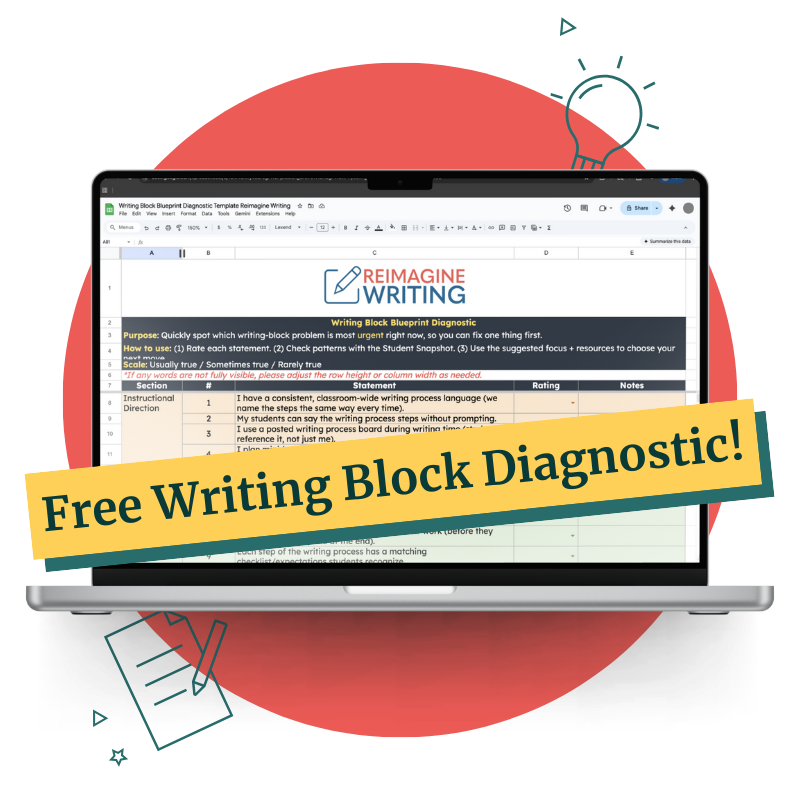
Not sure where your writing block needs help most? Take the free 2-minute writing block quiz to find the one thing to fix first.
The Spelling Helper is one piece of the Reimagine Writing Program, my complete K–5 writing system. Members get this resource along with daily lessons, success checklists, writing zones, syntax and editing routines, and every writing resource I create. Learn more about the Reimagine Writing Program.
For daily K–5 writing tips, follow me on Instagram at @lanesha_tabb.